
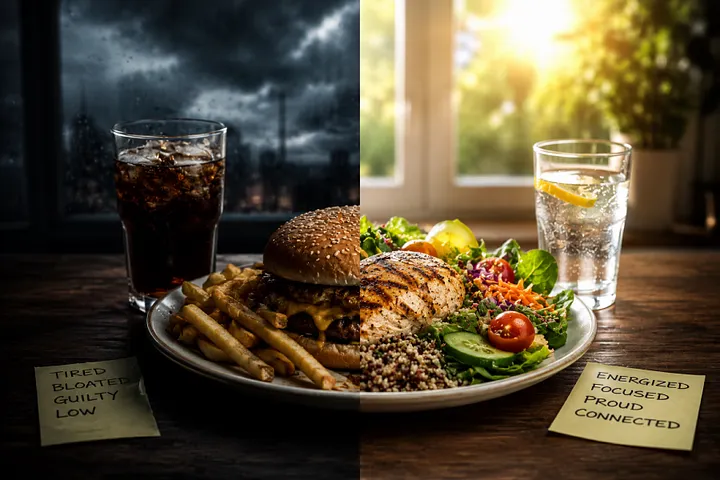
Most people can recall a time when they felt emotionally exhausted, anxious, irritable or just not themselves. During those periods, it is common to look toward obvious explanations. We blame stress at work, problems in our relationships, financial pressure, lack of sleep or the countless responsibilities that seem to pull us in every direction at once. Rarely do we stop and wonder whether what we have been eating might be playing a role.
For decades, mental health and nutrition were treated as entirely separate conversations. One belonged in the therapist’s office and the psychiatrist’s clinic. While the other belonged in the kitchen, the grocery store or the doctor’s office when discussing weight, cholesterol or diabetes. Today, that divide is beginning to disappear partly because researchers are uncovering evidence that what we eat may influence how we think, feel, cope with stress and even our vulnerability to conditions such as depression and anxiety.
This is not saying that a salad can cure depression or that a handful of almonds can eliminate panic attacks. Mental health is far too complex to be reduced to a single factor. Genetics, childhood experiences, trauma, relationships, sleep, exercise, physical health and countless other variables all contribute to emotional well-being. However, emerging research suggests that nutrition may be one of the most overlooked pieces of the puzzle. The foods we consume every day help build the very structures responsible for mood regulation, emotional resilience, concentration and motivation.
If the brain is the control center for every thought, feeling and behavior we experience, it makes sense to ask what happens when we consistently feed it well, and what happens when we do not?
Your Brain Is Built From What You Eat
The human brain accounts for only a small percentage of total body weight, but it consumes an enormous amount of energy. At any given moment, billions of neurons are communicating through intricate networks that depend on a steady supply of nutrients to function properly. Neurotransmitters such as serotonin, dopamine, norepinephrine and gamma aminobutyric acid play critical roles in mood regulation, motivation, reward, and emotional balance. These chemical messengers are not created out of thin air, but they are produced from the nutrients we consume.
The brain is also remarkably vulnerable to inflammation and oxidative stress. When inflammation becomes chronic, it can influence communication between brain cells, alter neurotransmitter activity and contribute to symptoms commonly associated with depression, including fatigue, low motivation, difficulty concentrating and emotional numbness. Researchers have increasingly observed that many individuals with depression show elevated markers of inflammation compared to those without depressive symptoms.
This has led to the growth of a field known as nutritional psychiatry, which examines the relationship between dietary patterns and mental health outcomes. Rather than focusing on individual nutrients alone, nutritional psychiatry explores how entire dietary patterns may either support or undermine emotional well-being.
The Remarkable Connection Between the Gut and the Brain
One of the most fascinating discoveries in recent years involves the relationship between the gut and the brain. Although most people think of the digestive system as little more than a mechanism for processing
food, scientists now understand that the gut functions as a sophisticated communication hub that constantly exchanges information with the central nervous system.
Within the digestive tract live trillions of microorganisms collectively known as the gut microbiome. These bacteria help digest food, regulate immune function, produce vitamins and influence the production of important neurotransmitters. The gut and brain communicate through multiple pathways, including the vagus nerve, hormonal signals, immune responses and microbial metabolites.
Many people are surprised to learn that a significant portion of the body’s serotonin is produced within the gastrointestinal system. While serotonin produced in the gut does not directly cross into the brain, the overall health of the gut microbiome appears to influence broader systems involved in mood regulation.
Researchers continue to investigate how disruptions in the microbiome may contribute to anxiety, depression and other psychiatric conditions. Although much remains to be learned, the evidence increasingly suggests that a healthy gut may support a healthier mind.
Foods That May Help Support a Better Mood
When discussing food and mental health, it is important to focus less on miracle foods and more on foods that consistently provide the nutrients the brain requires to function optimally.
Fatty fish such as salmon, sardines, trout and mackerel have attracted significant attention due to their high concentration of omega three fatty acids. These fats serve as important building blocks for brain cell membranes and appear to play a role in reducing inflammation. Several studies have found associations between higher omega three intake and lower rates of depressive symptoms. While omega threes are not a standalone treatment for depression, they may contribute to overall brain health and emotional resilience.
Leafy green vegetables such as spinach, kale and Swiss chard provide folate, magnesium and numerous antioxidants. Folate is particularly important because it plays a role in neurotransmitter synthesis. Some research has found that low folate levels are more common among individuals experiencing depression, raising important questions about the relationship between nutritional deficiencies and mental health symptoms.
Berries offer another powerful combination of nutrients. Rich in antioxidants and plant compounds known as polyphenols, berries may help protect the brain from oxidative stress. Because the brain consumes large amounts of oxygen, it is especially vulnerable to oxidative damage. Antioxidant-rich foods may help counteract some of these effects while supporting overall cognitive function.
Nuts and seeds provide healthy fats, magnesium, zinc and protein. Zinc deserves particular attention because researchers have repeatedly observed links between zinc deficiency and depressive symptoms. Pumpkin seeds, walnuts, almonds and sunflower seeds represent simple additions that may contribute to a more nutrient-dense diet.
Eggs remain one of the most nutrient-rich foods available. They contain high-quality protein, choline and several B vitamins involved in brain function. Choline serves as a precursor to acetylcholine, a neurotransmitter involved in memory, learning and cognitive performance.
Fermented foods such as yogurt, kefir, kimchi and sauerkraut have gained increasing attention because of their potential influence on the gut microbiome. Although the science is still evolving, maintaining a diverse and healthy population of gut bacteria appears to support broader systems involved in emotional regulation.
Even dark chocolate has earned a place in many discussions surrounding mood. Rich in flavanols and other bioactive compounds, dark chocolate may support blood flow to the brain while providing a modest boost in neurotransmitters associated with pleasure and reward. As with many things, moderation remains important.
The Foods That May Be Working Against You
While certain foods appear to support mental health, others may quietly undermine it.
Ultra processed foods have become a dominant part of the modern diet. These products often contain high amounts of refined carbohydrates, added sugars, unhealthy fats, preservatives and artificial ingredients while offering relatively little nutritional value. Growing evidence suggests that diets high in ultra processed foods are associated with increased rates of depression and anxiety.
One reason may involve inflammation. Another may involve the impact these foods have on the gut microbiome. Still another may relate to the fact that ultra processed foods often displace more nutrient-dense options that the brain relies upon.
Sugar deserves special attention because of its effect on blood glucose levels. Consuming large amounts of refined sugar can produce rapid spikes in blood sugar followed by equally dramatic crashes. During these crashes, individuals may experience irritability, fatigue, difficulty concentrating and mood fluctuations. Many people describe these experiences as feeling anxious or emotionally overwhelmed without realizing that blood sugar instability may be contributing to the problem.
Alcohol presents another complicated relationship with mood. While it may initially create feelings of relaxation or relief, alcohol is ultimately a central nervous system depressant. Regular or excessive alcohol use can disrupt sleep, increase anxiety, worsen depressive symptoms and interfere with emotional regulation. Many people who consume alcohol to manage stress find themselves trapped in a cycle where the very substance they use for relief, ultimately intensifies the symptoms they hope to escape.
Excessive caffeine can produce similar problems in susceptible individuals. While moderate caffeine consumption is generally safe for most people, high doses can increase nervousness, heart rate, restlessness and sleep disruption. For individuals already struggling with anxiety disorders, these effects can be particularly noticeable.
The Mediterranean Diet and Mental Health
When researchers examine dietary patterns rather than individual foods, one approach consistently stands out. The Mediterranean diet has become one of the most extensively studied eating patterns in both physical and mental health research.
Characterized by high consumption of vegetables, fruits, legumes, nuts, fish, olive oil and whole grains, the Mediterranean diet naturally incorporates many of the nutrients associated with brain health. It also tends to be lower in highly processed foods and refined sugars.
One landmark study known as the SMILES trial demonstrated that dietary improvements were associated with significant reductions in depressive symptoms among some participants with major depression. While dietary changes were not presented as a replacement for traditional treatment, the findings highlighted the possibility that nutrition may serve as a valuable component of a comprehensive mental health plan.
The significance of this research extends beyond any single diet. It suggests that mental health and physical health are not separate systems operating independently of one another. The same dietary patterns that support cardiovascular health, metabolic health and longevity may also benefit emotional well-being.
What This Means for Everyday Life
One of the most important lessons from nutritional psychiatry is that mental health rarely changes because of a single meal. Just as depression does not develop overnight, emotional resilience is not built through a single healthy lunch.
The greatest impact comes from patterns repeated consistently through time. A person who occasionally enjoys dessert is unlikely to experience major mood changes because of that choice alone. Similarly, eating salmon once will not transform someone’s mental health. The cumulative effect of daily habits matters far more than isolated decisions.
This perspective can be liberating because it shifts the focus away from perfection. Many people become discouraged when they view nutrition through an all or nothing lens. In reality, small and sustainable improvements often produce the most meaningful long-term results.
Adding more vegetables to meals, reducing ultra processed foods, increasing sources of healthy fats, supporting gut health and maintaining stable blood sugar levels are realistic changes that many people can begin implementing immediately. While these adjustments may not eliminate depression or anxiety, they may create a stronger biological foundation upon which other forms of healing can occur.
A Final Thought
Mental health treatment has traditionally focused on therapy, medication and behavioral change, all of which remain incredibly important. Yet the growing body of research surrounding nutrition invites us to broaden the conversation. The brain is not separate from the body. Every thought, emotion, memory and feeling emerges from a living biological system that depends on proper nourishment to function effectively.
Food is not a cure for mental illness, nor should anyone feel blamed for struggling with depression or anxiety because of what they eat. Life is far more complicated than that. However, understanding the connection between nutrition and mental health provides something valuable that many people desperately need: another avenue through which they can support their well-being.
Every day, we make choices about what we feed our bodies. Increasingly, research suggests that those choices may also influence what we feed our minds.
Sources
Firth, J., Marx, W., Dash, S., Carney, R., Teasdale, S. B., Solmi, M., Stubbs, B., Schuch, F. B., Carvalho, A. F., Jacka, F. N., and others. “The Effects of Dietary Improvement on Symptoms of Depression and Anxiety.” Psychosomatic Medicine, 2019.
Jacka, F. N., O’Neil, A., Opie, R., Itsiopoulos, C., Cotton, S., Mohebbi, M., Castle, D., Dash, S., Mihalopoulos, C., Chatterton, M., and others. “A Randomised Controlled Trial of Dietary Improvement for Adults With Major Depression (The SMILES Trial).” BMC Medicine, 2017.
Marx, W., Moseley, G., Berk, M., and Jacka, F. “Nutritional Psychiatry: The Present State of the Evidence.” Proceedings of the Nutrition Society, 2017.
Sarris, J., Logan, A. C., Akbaraly, T. N., Amminger, G. P., Balanzá Martínez, V., Freeman, M. P., Hibbeln, J., Matsuoka, Y., Mischoulon, D., Mizoue, T., and others. “Nutritional Medicine as Mainstream in Psychiatry.” The Lancet Psychiatry, 2015.
Lassale, C., Batty, G. D., Baghdadli, A., Jacka, F., Sánchez Villegas, A., Kivimäki, M., and Akbaraly, T. “Healthy Dietary Indices and Risk of Depressive Outcomes.” Molecular Psychiatry, 2019.
Adan, R. A. H., van der Beek, E. M., Buitelaar, J. K., Cryan, J. F., Hebebrand, J., Higgs, S., Schellekens, H., and Dickson, S. L. “Nutritional Psychiatry: Towards Improving Mental Health by What You Eat.” European Neuropsychopharmacology, 2019